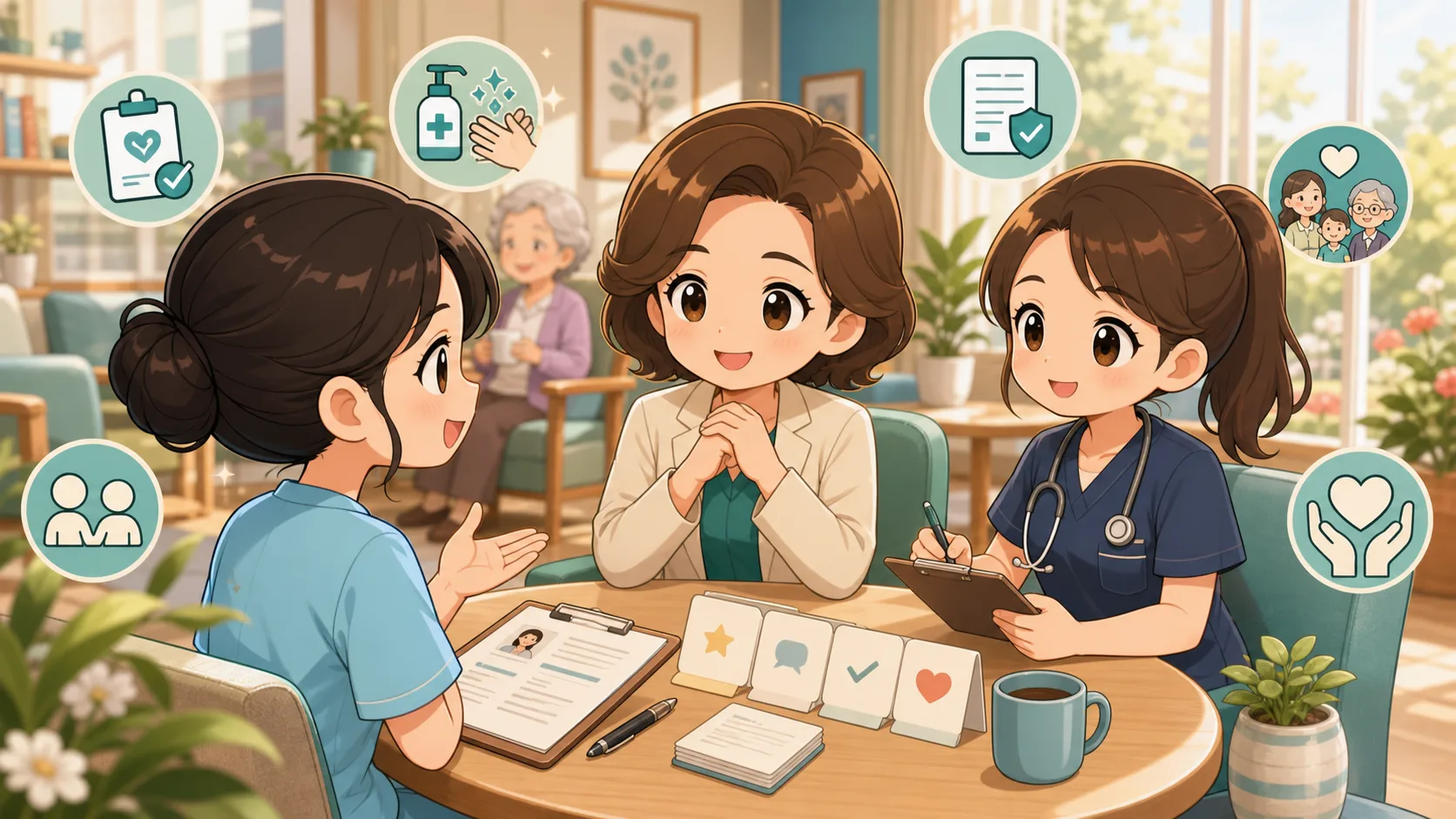
บทความนี้เอาคำถามสัมภาษณ์สาย aged care จากชุด practice ของคุณ Sunny มาเรียบเรียงใหม่ให้เป็นภาษาไทยอ่านง่าย พร้อมตัวอย่างคำตอบภาษาอังกฤษแบบคร่าว ๆ ที่เอาไปปรับเป็นเสียงของตัวเองได้ค่ะ
เป้าหมายไม่ใช่ให้ท่องจำทุกคำ แต่ให้เข้าใจว่า interviewer อยากฟังอะไร และเราควรเล่า experience ของตัวเองยังไงให้ดูปลอดภัย น่าเชื่อถือ และทำงานกับทีมได้จริง
ก่อนตอบ interview ให้จำ 3 เรื่องนี้
- ตอบให้เห็น safety เช่น infection control, fall risk, escalation, documentation
- ตอบให้เห็น teamwork เช่น report to RN/team leader, handover, progress note
- ตอบให้เห็น resident-centred care เช่น dignity, choice, belonging, family trust
ถ้ายังไม่รู้จะเรียงคำตอบยังไง ใช้โครงง่าย ๆ แบบ Situation - Action - Result หรือ What I do - Why it matters - Who I report to ก็พอค่ะ
Q1: How do you control infection risk?
เขาถามเพื่อดูอะไร: ดูว่าเราเข้าใจ hand hygiene, PPE, cleaning equipment และการป้องกันการแพร่เชื้อไหม
I follow standard infection control precautions on every shift. Hand hygiene is the foundation, and I clean my hands before and after resident contact, after exposure risk, and after removing PPE. I use gloves, mask, face shield or gown when required by the situation and workplace policy.
If a resident has a suspected or confirmed infection, I follow isolation instructions, reduce cross-contamination, clean shared equipment between residents, and report any concern to the RN or team leader. Infection control is not just a checklist for me. It protects residents, staff, and families.
ภาษา AtomDekNurse: อย่าตอบแค่ว่า “I wash my hands” ให้เพิ่มว่าเราใช้ PPE ตาม risk, ทำความสะอาด equipment และ report ถ้ามี concern
Q2: How do you report risk or incidents?
เขาถามเพื่อดูอะไร: ดูว่าเจอเหตุผิดปกติแล้วรู้จัก stop, check, call for help, report และ document หรือไม่
On one shift, I found a resident with blood on the bed and pillow. I stayed calm, checked the resident’s responsiveness and breathing, and immediately called for the RN using the emergency process. I gave a clear report about what I saw, where the resident was, and what I had checked.
I stayed with the resident, followed the RN’s direction, helped with personal care and bed change after the resident was stable, and documented the facts in the progress notes. That experience reminded me that early reporting can stop a small change from becoming a bigger risk.
อย่าพูดเกิน scope: ถ้าเราเป็น carer/AIN/PCW อย่าพูดเหมือนวินิจฉัยเอง ให้ใช้คำว่า observe, report, follow RN direction, document facts
Q3: What value is most important to you?
เขาถามเพื่อดูอะไร: ดูว่าเราเข้าใจ values ขององค์กร และโยงกับการดูแล resident ได้ไหม
The value that is most important to me is belonging. In aged care, residents should not feel like they are only receiving tasks. They should feel seen, known, and respected as a whole person.
For me, belonging means learning each resident’s name, preferences, routines and life story. Small things matter, such as greeting them warmly, respecting their choices, and helping them stay connected with family and the community. When residents feel they belong, care feels more human.
ทริค: ถ้า interview กับ provider ไหน ให้เปิด website เขาก่อน แล้วเลือก value ที่เราพูดได้จากใจ ไม่ต้องเลือกคำที่ดูเท่ที่สุด
Q4: What does teamwork look like to you?
เขาถามเพื่อดูอะไร: ดูว่าเราเข้าใจว่า aged care เป็นงาน 24 ชั่วโมง งานหนึ่ง shift ส่งผลต่อ shift ถัดไป
Teamwork in aged care means residents receive consistent care, even when staff change across shifts. For me, good teamwork starts with clear handover, accurate documentation, and respectful communication.
If I notice a resident has changed in mood, mobility, pain, skin condition or appetite, I report it to the RN or team leader and document it according to policy. I also support colleagues when the floor is busy. If someone is running behind, I help where I can because good teamwork protects both residents and staff.
Q5: Who is our client?
เขาถามเพื่อดูอะไร: ดูว่าเรามอง resident เป็นคนทั้งคน ไม่ใช่แค่ task list
The resident is always the primary client. Each resident has their own history, culture, preferences, routines and relationships. My role is to support the person, not just complete the task.
Families also matter because they trust us with someone they love. I communicate respectfully within my scope and escalate questions or concerns to the RN or manager when needed. Good care builds trust with both the resident and their family.
Q6: How do you manage conflict or complaints from family?
เขาถามเพื่อดูอะไร: ดูว่าเรารับมือกับอารมณ์คนอื่นได้ไหม และรู้จัก escalate แทนการโต้เถียง
My first step is to listen without interrupting. I acknowledge the family’s concern and stay calm. I do not make promises that are outside my role, and I do not guess if I am not sure.
If the concern is beyond my scope, I escalate it to the RN, team leader or manager. I explain what I can do next, document the concern according to workplace policy, and make sure the family knows their concern has been taken seriously.
ประโยคที่ใช้ได้จริง: “I understand your concern. I will report this to the RN/team leader now so it can be followed up properly.”
Q7: What does your normal shift look like?
เขาถามเพื่อดูอะไร: ดูว่าเราเข้าใจ routine งานจริง ไม่ใช่รู้แต่คำสวย ๆ ใน resume
At the start of the shift, I listen to handover and check each resident’s care plan, mobility needs, transfer risk, fall risk and any special instructions. I provide personal care such as showering, oral care, grooming and dressing while respecting dignity, privacy and resident choice.
During the shift, I assist with meals, hydration, mobility and comfort, and I keep observing for changes in condition, mood, skin integrity, pain or behaviour. I report concerns to the RN or team leader, document according to policy, and give a clear handover at the end of the shift.
ถ้ายังไม่มั่นใจ ให้เตรียมคำตอบแบบนี้
- เตรียม 1 story เรื่อง infection control หรือ manual handling
- เตรียม 1 story เรื่องเจอ resident เปลี่ยนแปลงแล้ว report
- เตรียม 1 story เรื่อง teamwork หรือช่วยเพื่อนร่วมงาน
- เตรียม 1 story เรื่อง family complaint หรือ communication
- เตรียมคำตอบว่า availability เราเป็นยังไง และเอกสารพร้อมแค่ไหน
คำตอบที่ควรเลี่ยง
- “I can do everything” ทั้งที่จริงยังต้อง training
- “I will decide by myself” ในเรื่องที่ต้อง report RN/team leader
- เล่า incident แล้วลืมพูดเรื่อง documentation
- พูดว่า family complaint เป็นเรื่องน่ารำคาญ
- ตอบ values แบบท่อง website แต่โยงกับ resident care ไม่ได้
สรุปแบบ AtomDekNurse
Interview งาน aged care ไม่ได้วัดว่าเราพูดอังกฤษสวยแค่ไหนอย่างเดียว แต่วัดว่าเรา ปลอดภัยไหม น่าเชื่อถือไหม รายงานเป็นไหม และดูแลคนจริงด้วยใจไหม
คำตอบที่ดีไม่ต้องยาวมาก แต่ต้องเห็นภาพว่าเวลาลง floor เรารู้ว่าต้องทำอะไร ถามใคร และ report ใคร
จำไว้ค่ะ งาน aged care เป็นงานที่ employer ต้องไว้ใจให้เราเข้าไปอยู่ใกล้คนที่เปราะบางมาก ถ้าเราตอบให้เห็นว่าเราทำงานแบบ safe, respectful, reliable และ trainable โอกาสที่เขาจะอยากคุยต่อจะดีขึ้นมาก
FAQ
ควรท่องคำตอบ interview ไหม
ไม่ควรท่องทุกคำค่ะ ควรจำโครงและเล่าจากประสบการณ์จริงของตัวเอง เพราะ interviewer มักถามต่อ ถ้าท่องมาอย่างเดียวจะหลุดง่าย
ถ้าไม่มี experience ในออสเตรเลียตอบยังไง
ใช้ experience จาก placement, volunteer, งานบริการ หรือสถานการณ์ที่แสดงว่าเราปลอดภัย รับผิดชอบ และสื่อสารเป็น แต่ต้องบอกตรง ๆ ว่าอะไรคือ experience จริง
ตอบ incident แบบไหนถึงดูดี
ตอบให้เห็นว่าเรา observe ได้ไว, stay calm, call for help, report to RN/team leader, follow direction และ document facts ตาม policy
ต้องรู้ values ขององค์กรไหม
ควรรู้ค่ะ แต่ไม่ต้องท่องทุกคำ เลือก 1 value ที่เราพูดได้จริง แล้วโยงกับ resident care หรือ teamwork
ควรพูดเรื่อง availability ไหม
ควรเตรียมไว้ เพราะงาน aged care หลายที่ต้องการคนที่ลง shift ได้จริง โดยเฉพาะ afternoon, weekend หรือ short notice แต่ให้ตอบตามความจริง ไม่รับปากเกินชีวิตตัวเอง
แหล่งข้อมูลที่ควรเช็กต่อ
ก่อนเอาไปสมัครเรียน ยื่นวีซ่า หรือใช้ตัดสินใจจริง
อ่านเนื้อหาหลักให้เข้าใจก่อน แล้วใช้ส่วนนี้เช็กบริบท แหล่งทางการ และขั้นต่อไปที่เกี่ยวข้องกับสถานการณ์ของตัวเอง
ใช้บทความนี้อย่างไร
คนที่อยากเริ่มงาน Carer, PCW, PCA, AIN หรือใช้ Aged Care เป็นฐานเข้าสายสุขภาพ
- scope งานจริงและความพร้อมด้านร่างกาย/ภาษา
- RTO, Cert III, placement และเอกสารก่อนฝึกงาน
- Fair Work, pay rate, allowance และ roster ของนายจ้าง
อยากอ่านต่อแบบไม่หลงทาง?
ไปที่คู่มือหลักของหัวข้อนี้ก่อน จะเห็นภาพรวม แล้วค่อยกลับมาอ่านบทความประสบการณ์จริงทีละขั้น