
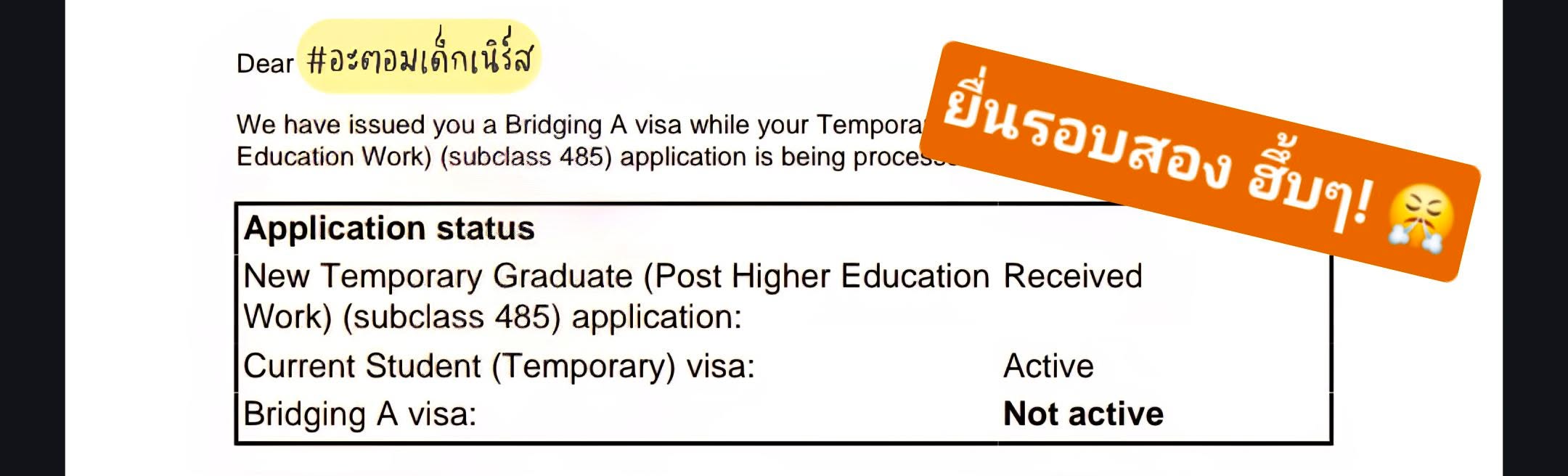
Reapplying for a visa is never something anyone wants to deal with. But once it happens, the most important thing is not letting one mistake shake your whole life plan. In the source post, the writer shared that they had already submitted a new application after a mistake and chose to treat the problem as something to solve, not something to drown in. That mindset feels very real for Thai people studying, working, or building a future in Australia, because visa issues are not just paperwork. They affect time, money, and mental energy.
This article does not replace legal advice or migration guidance, and it does not assume every case is the same. Instead, it turns the lesson from the shared experience into practical guidance for anyone who is dealing with a reapplication, a corrected submission, or the fear of making a similar mistake.
When your application goes wrong, do not assume your future is ruined
What stands out in the original post is the attitude: when there is a problem, solve the problem. It sounds simple, but it is hard in real life, especially when it means more fees, more waiting, and checking everything again from the beginning.
Anyone living abroad knows that visa mistakes do not just cause frustration. They can affect work plans, study plans, housing, and day-to-day expenses. If the visa is tied to a major transition point in life, such as after graduation or before starting work, the pressure can feel even heavier.
Still, one mistake does not automatically mean there is no way forward. In practice, the best next step is to separate emotion from action. Once your mind becomes calmer, the next steps become much easier to see.
Reapplying for a visa starts with understanding what actually went wrong
Before submitting again, the key is not speed but clarity. If you do not identify the original problem, you may repeat the same mistake in the next application.
1) Find the exact source of the problem
- Missing documents such as incomplete uploads, forgotten files, or expired documents
- Inconsistent information such as name, date of birth, address, education, or work history not matching across documents
- Wrong visa type or wrong timing due to misunderstanding the requirements
- Small detail errors which can become big issues in visa processes
If you received emails, notices, or any follow-up documents, collect them in one place and read them carefully. Even a short explanation can contain the key to fixing the next attempt.
2) Separate what you know from what you are only assuming
When people get stressed, they often start guessing. They assume they will definitely be refused, that all options are gone, or that they must do exactly what someone else did. But every case is different. A safer approach is to split things into two lists.
- What you know for sure such as the date you reapplied, what was added, and what costs were involved
- What you are still unsure about such as a specific condition, what happens after lodgement, or how long processing may take
This helps reduce panic and stops you from doing unnecessary things.
The emotional lesson: mistakes happen, but do not let them break you
The source post includes a comforting idea: even the wise can make mistakes. That matters, because no matter how careful we try to be, errors can still happen, especially in complex systems like visa applications.
When people make a mistake, they often carry two layers of exhaustion at once: the real problem itself, and the self-blame that comes with it. To get through this period well, both need attention.
- Allow yourself to feel disappointed, but do not keep punishing yourself
- Take a short mental break, then return to the documents with focus
- If someone can help check things, ask for help
- Calmness matters just as much as speed
For people living far from home, the gratitude expressed in the post also rings true. Sometimes what gets us through a paperwork crisis is not only information, but the people who remind us, check things with us, and keep us steady.
Money matters too, especially if you need to apply again
The writer joked that this kind of setback could mean living on instant noodles for months. It is funny, but also very real. Reapplying often comes with unplanned expenses, including application fees, document preparation, translations, transport, or other indirect costs.
If you need to submit again, make a short-term budget immediately.
- List the costs that have already happened
- Estimate any possible upcoming expenses
- Pause non-essential spending for a while
- Keep a buffer for unexpected issues
A simple money plan can help you stay calm and make better decisions while waiting.
If your case involves visa 485, what should you watch out for?
The original post mentions “485,” so it is reasonable to understand that the situation may relate to a Subclass 485 visa or a plan connected to it. However, based on the post alone, it would not be appropriate to assume more than what was shared publicly.
What we can say carefully is that post-study transition visas often involve detailed requirements, including timing, evidence of course completion, current visa status, and supporting documents relevant to that period.
So if your case does involve visa 485, it is best to check the latest official information or speak with a properly qualified professional, especially when timing, personal circumstances, or bridging issues are involved.
Checklist before you press submit again
If you are about to reapply for a visa, use this checklist first.
- Check your full name, passport number, and date of birth everywhere
- Make sure every uploaded file opens properly and is the latest version
- Name your files clearly so they are easy to review later
- Double-check key dates such as expiry dates and issue dates
- Review whether the form answers match the attached documents
- If you are unsure about something, do not guess
- Leave time for one full review without rushing
A very practical tip is to ask someone you trust to review everything once more. Many mistakes happen simply because we become too used to seeing our own documents.
Summary: mistakes can happen, but make sure you bring the lesson forward
The source post carries a very honest kind of encouragement. It does not pretend things are easy or without cost. But it shows that after making a mistake, you can still reset yourself, appreciate the people who supported you, and keep moving forward.
If you are in the same place right now, do not label yourself as careless forever because of one mistake. See this as learning to handle a complicated system with greater maturity. If you deal with it well, your next submission may be much stronger precisely because you have already been through the hard part once.
Some visa problems are fixed with documents, some with time, but many also require a mind that does not fall apart first. If you can still move forward, you have not lost yet.
Quick summary
Reapplying after a visa mistake is not the end. The most important things are identifying the original issue, checking documents carefully, managing your budget, and not letting stress cause another error. If you are unsure about your specific case, check official sources or seek suitable professional advice.
FAQ
What should I do first after a failed visa attempt?
Start by reviewing the original reason for the mistake, such as missing documents, inconsistent information, or misunderstanding the requirements. Then fix the issue step by step before submitting again.
What if I feel too stressed to even open the documents again?
Take a short break first, then return with a clear process. Separate what you know from what you are unsure about, and ask someone you trust to help review things if possible.
Do I always have to pay more when reapplying?
There are often additional costs, but the exact amount depends on the visa type and the details of your case. This article only reflects the source poster’s experience that reapplying brought extra financial pressure.
What should I be careful about if my case involves visa 485?
Pay close attention to timing, supporting documents, and consistency across all information. Because the details can be strict, it is safest to check the latest official requirements.
Does one mistake mean my future is ruined?
Not necessarily. A mistake can cost time, money, and emotional energy, but if you stay calm and fix the right issues, you can still move forward.
Source: Original Facebook post